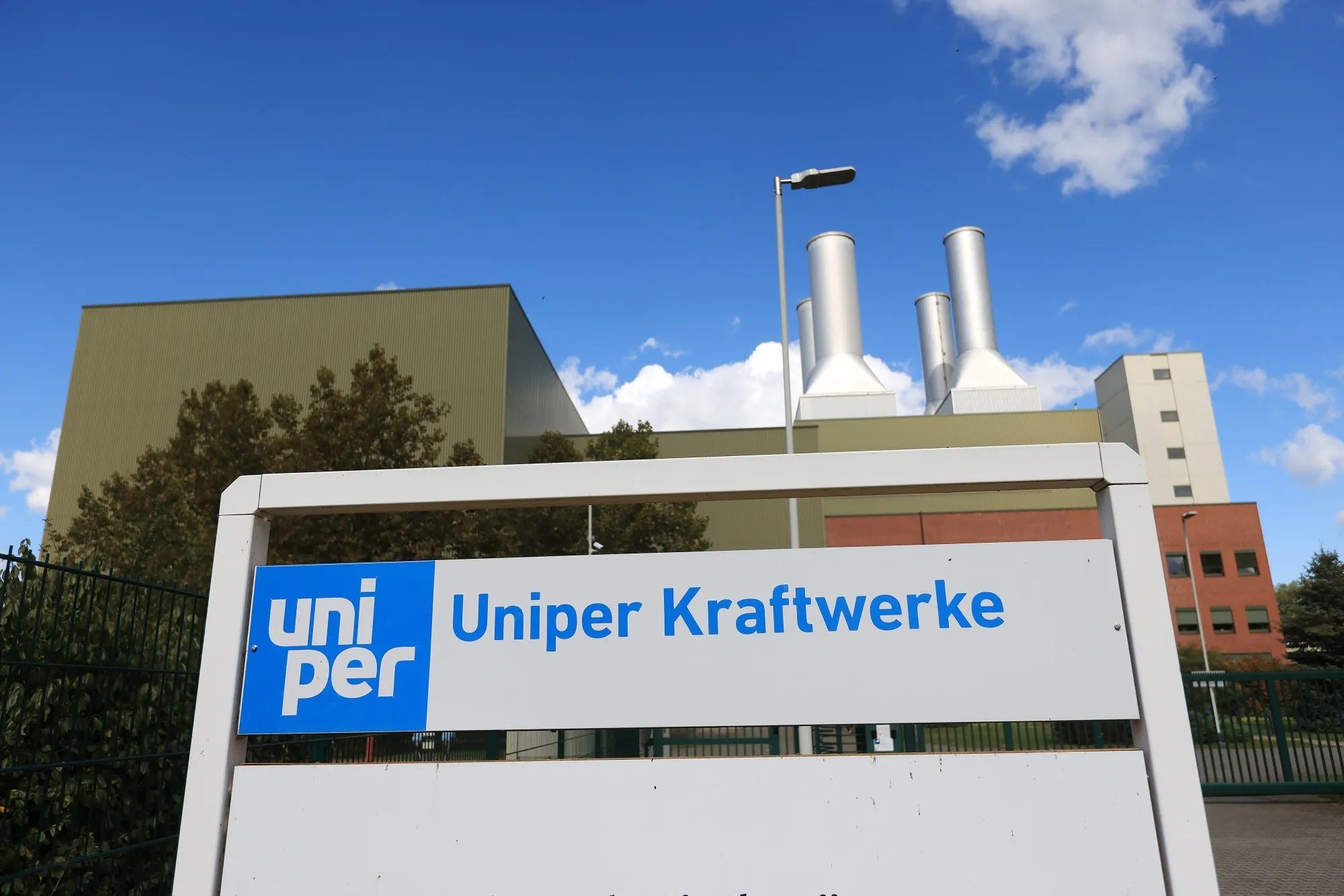
Uniper Is Not Cheap. It’s Mis-Owned. And That’s Where the Return Comes From.
FREE READ!
I usually look for category-defining businesses.
Clear ownership.
Aligned incentives.
Long-term compounding built into the structure.
Uniper fails almost every one of those filters.
And yet, this is exactly why it’s interesting.
Not as a forever holding.
Not as a clean compounder.
But as a rare European special situation where ownership, not operations, is the dominant variable.
Those setups don’t show up often.
And when they do, they deserve attention.
The Market Is Pricing Politics, Not the Business
Let’s start with what actually matters.
As of today:
Uniper market cap: roughly €14–16bn
Annual revenue: well north of €100bn
System relevance: critical supplier of gas, power, and dispatchable capacity to European industry
Ownership: effectively state-controlled
This is not a broken business.
This is a business that is not allowed to behave like a business.
And markets price that brutally.
When you don’t control your own cash flows, capital allocation, or dividend policy, valuation collapses. Not because earnings don’t exist, but because they are not fully claimable.
That is the discount.
Why Revenue and Volatility Miss the Point
Many investors get stuck on the wrong debate:
volatile earnings
trading exposure
cyclicality
All of that is already known. All of it is already priced.
The market is not confused about Uniper’s volatility.
What the market is pricing is this:
Who ultimately owns the cash flows?
As long as the answer is “the state”, the multiple stays low.
Change that answer, and valuation math changes immediately.
The Real Question Investors Should Ask
The correct question is not:
“Is Uniper a great business?”
The correct question is:
What happens to valuation when Uniper is no longer treated as a political instrument?
Same assets.
Same infrastructure.
Same role in the energy system.
Different ownership.
That’s the entire thesis.
Why Downside Is More Limited Than It Appears
Uniper is not optional to Europe’s energy system.
It sits at the intersection of:
gas procurement
dispatchable power
grid stability
industrial load coverage
Germany’s Kraftwerkstrategie makes this explicit.
This is not ideology.
This is physics.
When renewables don’t deliver, dispatchable power matters.
When industry needs certainty, system operators matter.
That puts a floor under relevance, even if earnings fluctuate.
This is not a marginal commodity producer that disappears in downturns.
It is infrastructure.
The India Signal Matters More Than Headlines
When Uniper’s CEO joins energy and trade talks in India alongside Chancellor Friedrich Merz that’s not optics.
India represents one of the largest long-term energy demand curves globally:
gas
power
industrial infrastructure
Uniper being part of those discussions tells you how the German state actually views the company:
Not as a temporary rescue asset
But as a strategic energy competence platform
That matters for optionality.
States don’t permanently own assets they want to scale globally.
They stabilize them, then step back.
Re-Privatization Is the Unlock, Not Growth
This is not a growth story.
No heroic assumptions are required.
The upside comes from normalization, not expansion.
Let’s frame it conservatively.
Base Case: Partial Normalization
Gradual reduction of state ownership
Clearer capital return framework
Business treated as commercial, not political
In that scenario, Uniper does not need to become perfect.
It only needs to stop being mis-owned.
A valuation in the €25–30bn range would already reflect:
continued volatility
infrastructure relevance
normalized ownership
From today’s €15bn, that implies:
~70–100% upside
without assuming earnings growth
Upside Case: Full Normalization
Clear government exit path
Normal free float
Cash flows fully claimable by shareholders
In that scenario, Uniper would be valued as what it is:
a system-critical European energy infrastructure operator.
A €35–40bn valuation is not aggressive under those conditions.
From today:
~2–2.5x potential return
Again:
no growth assumptions
no margin miracles
just ownership change
Timelines: This Is a Patient Setup
This will not resolve in a quarter.
Expect:
political noise
uneven communication
slow steps
market frustration
That’s normal.
European re-privatizations take time.
Think 2–5 years, not months.
The payoff, when it comes, tends to be non-linear.
Why This Is Not a Core FJ Holding
Let me be very clear.
This is not:
a forever compounder
a sleep-well position
a capital-light machine
This is a structure-driven opportunity.
You are underwriting:
ownership change
political incentives
valuation normalization
That’s uncomfortable.
But discomfort is often where returns come from.
Why I’m Sharing This With the FJ Research Community
Because ownership distortions are one of the most underappreciated sources of mispricing in public markets.
Most investors look at businesses.
Few look at who controls them.
Uniper is a live case study.
The Tool I Use to Work Through This
When I analyze complex situations like this, I rely heavily on Fiscal.ai
It helps me:
normalize financials
cut through filings
model re-rating scenarios
focus on structure over noise
I use it every day.
If you want to level up your research:
Final Thought
Uniper is not misunderstood because investors are lazy.
It’s misunderstood because ownership distorts valuation.
If and when that ownership normalizes, the stock will not wait politely.
That’s the setup.
Become a Full FJ Research Member
If you want:
real frameworks
original ideas
real capital at risk
Join the FJ Research community.
This is where I share how I actually think
not what’s comfortable
not what’s consensus


