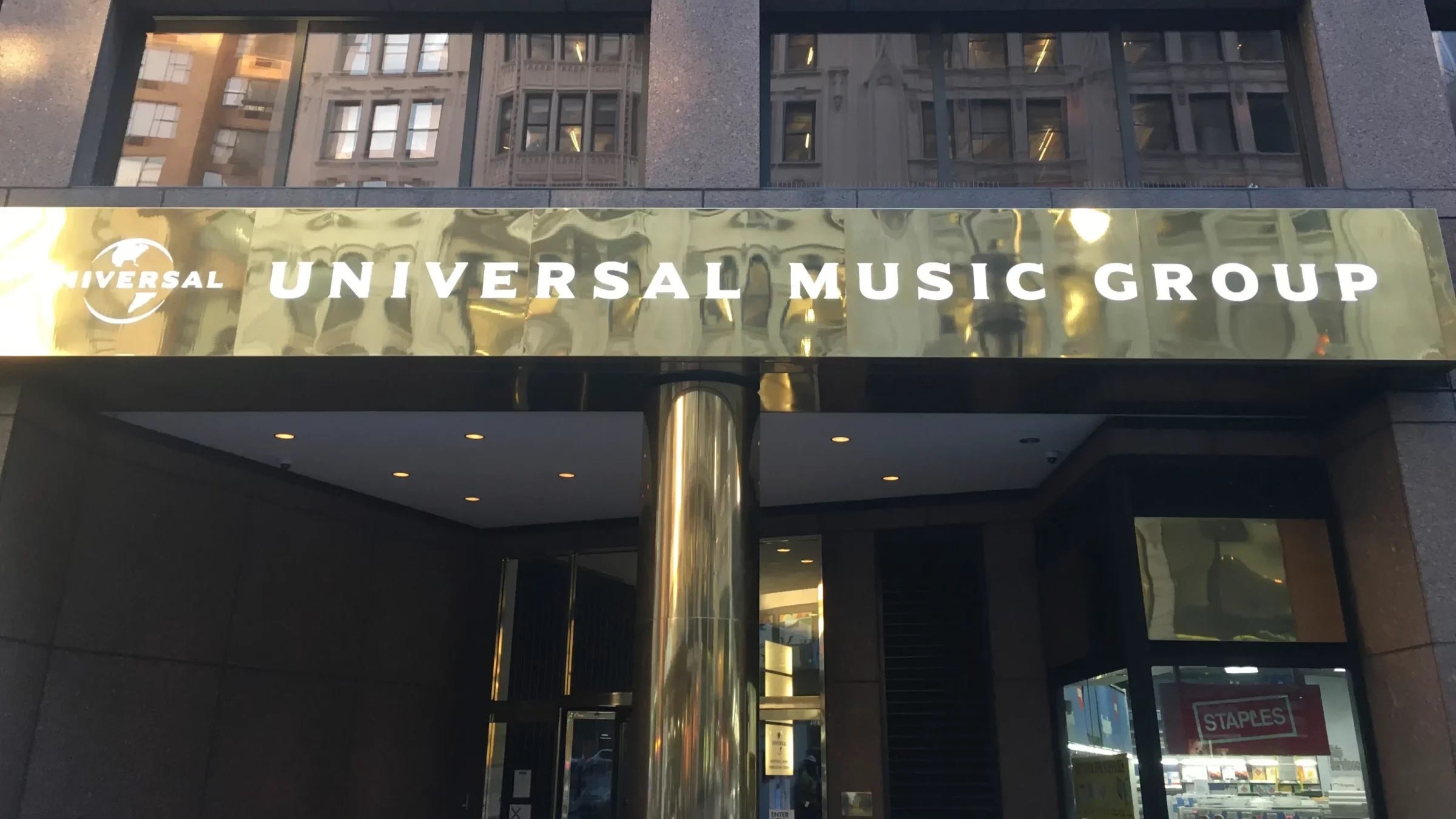
Why I Don’t Own Universal Music Group (Despite Loving the Business)
FREE READ
1/
Bill Ackman has been promoting Universal Music for years.
He once said:
“If I could only own one stock for 10 years and markets were closed, it would be UMG.”
In theory, I understand why.
2/
Music is universal.
It is the lowest-cost form of entertainment.
It scales globally.
It generates royalties.
It throws off free cash flow.
From the outside, it looks like the Netflix of music.
Simple. Predictable. Durable.
3/
More people on Earth = more music.
More smartphones = more streaming.
More platforms = more consumption.
On paper, this is the perfect business.
A global royalty machine.
4/
But now let’s leave theory and enter the real world.
The core problem is this:
Music is becoming commoditized.
Artists are becoming independent.
Gatekeeping is dying.
And that changes everything.
5/
Twenty years ago, labels were gatekeepers.
If you wanted distribution, promotion, and access, you needed them.
Today?
You need an internet connection.
That’s it.
6/
If you are in New York, Lagos, London, or Singapore, you can:
Open Instagram.
Open YouTube.
Upload your music.
Build an audience.
Monetize directly.
No label required.
7/
A perfect example is Burna Boy.
He built a global audience largely on his own.
Campaigns. Branding. Distribution. Reach.
No traditional gatekeeper.
Millions of fans worldwide.
8/
This is not an exception.
This is the new default.
The barriers to entry in music are collapsing.
And when barriers collapse, margins follow.
9/
So what do labels still do?
Mostly:
Distribution
Administration
Legal
Catalog management
Marketing support
Important services.
But not irreplaceable.
And not worth monopoly rents.
10/
The “label as kingmaker” model is dead.
Artists no longer need permission to be heard.
They need algorithms and attention.
Not contracts.
11/
Yes, Universal owns an old catalog.
But here is an uncomfortable truth:
Kids today don’t listen to The Beatles.
They just don’t.
And the next generation will care even less.
12/
Cultural memory is shrinking.
Hits don’t last decades anymore.
They last months.
Maybe a few years.
Then they are replaced.
13/
Music cycles are accelerating.
Streaming cycles.
Social media cycles.
Trend cycles.
Everything is faster.
Everything decays quicker.
14/
Artists understand this.
So what do they do?
They fight for ownership.
They fight for catalogs.
They fight for control.
15/
Because one hit today can be monetized forever.
If you own it.
If you don’t, you are working for someone else.
16/
Look at the smartest artists.
Beyoncé.
Taylor Swift.
They structured their careers around ownership.
Not dependence.
17/
Beyoncé became a billionaire by owning her distribution and content.
Taylor Swift re-recorded her catalog to regain control.
This is not rebellion.
This is rational economics.
18/
The era of “sign away everything and be grateful” is over.
Artists now think like entrepreneurs.
That is bad for labels.
19/
Yes, there will always be superstars.
Michael Jackson.
Madonna.
Marvin Gaye.
Icons will exist.
But icons don’t justify $20B+ valuations alone.
20/
You cannot build a durable monopoly on talent that does not belong to you.
Talent walks.
Catalog ages.
Power shifts.
21/
Universal looks cheap.
Universal looks stable.
Universal looks perfect in theory.
I agree.
22/
But structurally, the industry is moving against them.
More creators.
More independence.
More platforms.
Lower switching costs.
That is not a moat.
That is erosion.
23/
This is not about bankruptcy risk.
Universal will survive.
It will generate cash.
It will pay dividends.
It will look “safe”.
24/
But “safe” is not enough for me.
I want businesses that get stronger with time.
Not businesses that slowly leak power.
25/
In music, power is shifting to:
Creators.
Platforms.
Algorithms.
Direct-to-fan models.
Not labels.
26/
My conclusion:
Universal Music is a high-quality company.
It is well run.
It is profitable.
It is disciplined.
But structurally challenged.
27/
It is perfect in textbooks.
Imperfect in reality.
28/
That is why, despite liking the business and understanding the bull case:
I don’t own it.
I won’t own it.
It is not for me.
29/
As investors, we don’t get paid for loving businesses.
We get paid for understanding where power is going.
30/
My capital follows that reality.
Not the theory.


